Versional specialist Tjitze Baarda (Free University, Amsterdam) wrote of the Schøyen codex that it "presents us with a most intriguing version of Matthew, and therefore it should be studied carefully to establish the place which it takes in textual history…. I entertain the hope that this enigmatic text will become the object of a careful investigation in the near future. It might be an appropriate research object for a dissertation of someone who is interested in the relation of the Greek text and the early translations of the New Testament in general and the Coptic versions in particular" (NT 46.3, p.306).
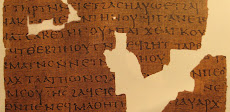
Codex Schøyen 2650, the recently discovered (1999) Coptic manuscript of Matthew's gospel, is extraordinary for its great antiquity (300-350 C.E.), and sensational for its unusual text which may differ from canonical Matthew. Its editor, the late Hans-Martin Schenke, claimed it reflects a Hebrew or Aramaic Matthew derived from a Greek Vorlage unlike any other extant manuscript. His conclusions would have a wide range of consequences for Matthean studies, including the formative development of the gospels.
Some of these conclusions were questioned on methodological grounds by Baarda. While Baarda emphasized that his criticisms could only speak to the small portion of text which he examined (Matt 17:1-9), he urged that a full review of the entire manuscript be undertaken.
Even if some of Schenke's conclusions go too far, ms. Schøyen 2650 remains a potentially important witness to the text of Matthew. The great antiquity of the codex gives it automatic significance. Further, it may reflect one of the earliest attempts to translate Matthew into Coptic, and give indication of the latitude a translator might deem appropriate. Moreover, the publication of ms. Schøyen 2650 necessitates reconsideration of the development of the Coptic versions. A thorough understanding of the Schøyen codex and the place of the Coptic versions will probably become increasingly critical as Egypt continues to be the primary source of new manuscript discoveries.
Therefore, I propose to analyze ms. Schøyen 2650 in the hopes that codicological, papyrological, and textual data will assist in explaining its unusual text and its role in transmission history. This analysis will be achieved by a comparison of ms. Schøyen 2650 with other Coptic versions and manuscripts, and with the translation dynamics of other early versions, with a particular sensitivity to textual variation in the whole manuscript tradition. Ultimately, the project will be designed to make ms. Schøyen 2650 and the Coptic versions more helpful in establishing the text of Matthew, and address implications regarding the formative history of Matthew's gospel.


 Posts
Posts


