My prior blog on inerrancy prompted a question regarding the two accounts of Jairus' daughter. Mark 5:23 has Jairus saying that his daughter was near death, whereas Matt 9:18 has him saying that she was dead. How then can the text be inerrant in the face of such blatant contradiction.
There are so many "contradictions" of this sort in the Gospels. My favourite is the ripping of the veil. In Matthew and Mark, it comes consequent to Jesus' death, while in Luke, it precipitates Jesus' death. In such cases, we moderns are prone to impose our concept of exactitude onto the text, as if the disciples set themselves staged on the two scenes with atomic clocks awaiting to see whether the veil ripped first or Jesus' death occurred first, with wireless walkie talkies to communicate the results.
But I think inerrancy allows for such inexactitudes. If you ask me what time it is, I respond, 8:15, when in fact it might be 8:17:04.
The case of Jairus' statement is a little different. Is Matthew allowed to telescope past Mark's detail of the process of Jairus first saying that his daughter was sick and then consequently being informed of her death? I think so. If I were telling the story and wanted to pare it down to its essentials while maintaining good literary form, would I be allowed to change Jairus' words in order to get to the main point that she was dead? I think so--at least by ancient standards. I think if you asked a first century Jew if Matthew or Mark were mistaken in their reports, I think they would say "No."
In the case of the disparities in the ripping of the veil, Matt and Mark's presentation emphasises a theology of judgment: Israel just killed God's Son, and judgment and destruction is consequently inevitable. In contrast, Luke's presentation emphasises the vindication of Jesus: Jesus cried, "Into your hands, I commit my spirit," and God opens the veil in order to welcome him into the heavenly Holy of Holies.
I'm not sure if there are any theological motivations behind Matt's presentation of the Jairus' story. He may have modified it for literary reasons. Matt constantly reduces Mark's story down to the essentials for literary effect. The process will inevitably produce the kinds of inconcinnities as we find in this pericope.
Ultimately, we must ask, "Is the text exactly the way that God wanted it to be?" By faith, I reply, "Yes."
Showing posts with label Inerrancy. Show all posts
Showing posts with label Inerrancy. Show all posts
Monday, 8 December 2008

Thursday, 27 November 2008
The Rhetoric of Inerrancy
Some Evangelicals go out of their way to combat the term inerrancy. As I've said recently, I don't mind Evangelicals not using the term inerrancy, but I think it is problematic for Evangelicals to make the concerted effort to berate the usage of the term.
Usually, Evangelicals who berate the term inerrancy are quick to affirm the Bible as the Word of God. They might even affirm the Bible's "infallibility" (I can't really perceive much difference between the two terms) and "authoritative."
This being the case, their argument against "inerrancy" is problematic. They end up implying that the Bible has errors in it, and this is a problem for people who otherwise have such a high view of scripture.
Usually, Evangelicals who berate the term inerrancy are quick to affirm the Bible as the Word of God. They might even affirm the Bible's "infallibility" (I can't really perceive much difference between the two terms) and "authoritative."
This being the case, their argument against "inerrancy" is problematic. They end up implying that the Bible has errors in it, and this is a problem for people who otherwise have such a high view of scripture.
Wednesday, 26 November 2008
Inerrancy, Authority and the Original Text
I had a good chat with a long time scholar friend who bristled at the term inerrancy. He does believe in the authority of the Bible, but argued that we should avoid the term inerrancy since we don't have the original manuscripts of the Bible.
But nonetheless, the Bible is authoritative, he assured me.
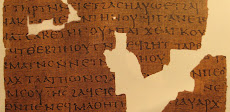
The problem with this line of argumentation is that it fails to understand that the text is something which is non-physical. The Word of God is "immaterial" and is merely reflected (more or less) in the various manuscripts of the New Testament, depending on the accuracy of the scribe and exemplars. We reconstruct the inerrant Word of God as best we can based upon these material witnesses. The physical manifestation of the text (i.e., the manuscripts) are patently not inerrant--they have errors in them; yet the ultimate reality of God's Word behind the physical manuscripts is perfect.
My friend would not accept this argument of mine, insisting that it is impractical to argue for the perfection of something which has no physicality. So I asked him what is it then that he thinks is "authoritative." He replied, "The Word of God." But I replied, "Do you mean the physical manuscripts, or the real text behind the physical manifestation of the text reflected in the manuscripts?"
This stumped him. Ultimately, if you can't have an inerrant text without the original manuscripts, neither can you have an authoritative text without the original manuscripts.
Of course, for myself, I have no problems with saying that the real text behind that which is physically manifested in the manuscripts is inerrant, and the fact that we don't have the original manuscripts doesn't impact this perception.
But nonetheless, the Bible is authoritative, he assured me.
The problem with this line of argumentation is that it fails to understand that the text is something which is non-physical. The Word of God is "immaterial" and is merely reflected (more or less) in the various manuscripts of the New Testament, depending on the accuracy of the scribe and exemplars. We reconstruct the inerrant Word of God as best we can based upon these material witnesses. The physical manifestation of the text (i.e., the manuscripts) are patently not inerrant--they have errors in them; yet the ultimate reality of God's Word behind the physical manuscripts is perfect.
My friend would not accept this argument of mine, insisting that it is impractical to argue for the perfection of something which has no physicality. So I asked him what is it then that he thinks is "authoritative." He replied, "The Word of God." But I replied, "Do you mean the physical manuscripts, or the real text behind the physical manifestation of the text reflected in the manuscripts?"
This stumped him. Ultimately, if you can't have an inerrant text without the original manuscripts, neither can you have an authoritative text without the original manuscripts.
Of course, for myself, I have no problems with saying that the real text behind that which is physically manifested in the manuscripts is inerrant, and the fact that we don't have the original manuscripts doesn't impact this perception.
Subscribe to:
Posts (Atom)

 Posts
Posts


